
April 14th, 2026
Written by Abby Lieberman
My cat, Professor Zigzag, has little interest in many of the toys I’ve bought him. Plush mice and motorized balls are largely ignored. But the moment I appear with a wand toy, everything changes. My rather plump, ten-year-old cat fervently bounds around, protecting our household from the grave threat of a plush fish on a string. Watching him recently, I realized that I take it for granted that most mammals, including humans, play. Why do mammals invest time and energy in playing when it doesn’t help them survive?
Why do we play?
Scientists believe that play helps young animals learn social and behavioral skills that will benefit them in adulthood. Animals constantly encounter new and uncertain situations, so being able to respond appropriately provides a significant advantage. Playful social interactions help young animals learn to adjust their behavior based on context or feedback, for example deciding when to continue or back off during play, which is important for navigating new situations in adulthood7,12. Play also exposes animals to structured social interactions, where they must follow implicit rules, such as turn-taking, and respond to signals from others. Through these interactions, animals learn to anticipate and adapt to the behavior of their partners, which may support the development of perspective-taking abilities13.
Learning through play seems to be crucial. Animals that are deprived of play early in life tend to respond inappropriately to challenging social situations as adults4, and often show more impulsive behavior5. In humans, play is strongly linked to the development of executive function, which includes flexible thinking, self-control, attention, and memory3. Scientists think that because many young mammals play, the parts of the brain responsible for play likely developed early in mammalian evolution and are present across mammalian species7. This means we can use laboratory animals like rats to study the neuroscience of play by recording their brain activity while they play.
What rat brains can teach us about play
Hide-and-seek is a simple game, but requires a lot of skills: understanding rules, switching between hider and seeker, and keeping track of what another player can or cannot see. For a long time scientists assumed that this kind of structured, rule-based play was mostly unique to humans, and that animals like lab rats mostly engage in “rough-and-tumble play”6 (essentially wrestling!). However, a study from a few years ago challenged this idea by successfully teaching rats how to play hide-and-seek!2
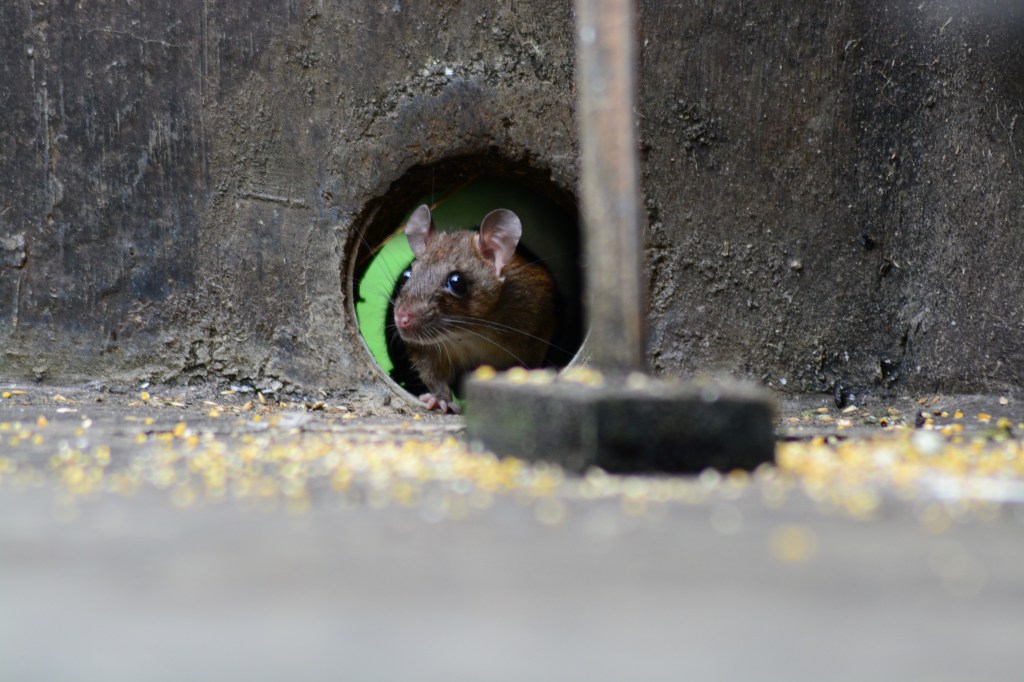
Researchers trained teenage rats to alternate between being the “hider” and the “seeker” in a room with boxes for the rats to hide in and barriers for the researchers to hide behind (Video 1). Within two weeks, the rats learned to find the experimenter, revisit successful hiding locations, and adapt their behavior depending on whether they were hiding or seeking. When the rat found the experimenter or the experimenter found the rat, the animal was rewarded with activities they enjoy like petting and tickling. When hiding, rats preferred to sit in opaque boxes and made fewer noises, indicating that they were avoiding being seen. Rats seemed to really enjoy the game; the researchers reported that they were highly vocal and eager to engage in the game, so much so that they even made freudensprung, which directly translates to “joy jumps”.
While the rats played, the researchers collected recordings from a part of the brain called the medial prefrontal cortex (mPFC), a region involved in decision-making, memory, and social behavior10,11. Individual neurons in the mPFC responded to different events of the hide-and-seek game. For example, some cells were mostly active during the start of a round, or mostly active when the rat was acting as the “hider”. Importantly, this suggests that mPFC neurons are not just responding to movements or sensations, but are encoding abstract features of the game, such as the animal’s role and the structure of the interaction. These results are also exciting because similar brain structures in humans seem to also be involved in social behavior, play, and rule following, supporting the idea that the brain structures controlling play are conserved across mammalian species. The hide-and-seek results led the researchers to believe that the game could also be used to understand perspective taking skills. Because the game requires animals to adjust their actions based on what another individual is likely perceiving or intending, it provides a natural framework for studying these skills. For example, a rat hiding effectively must choose locations that are out of the seeker’s line or sight, while a seeking rat must predict where others are likely to hide.
Studying play in rats also lets scientists look at the brain in ways that are still difficult to achieve in people. In rodents, researchers can track the activity of individual neurons while the animal is freely moving and interacting with others. In humans, scientists can sometimes record from single neurons during brain surgery8,9, but these recordings are rare and can’t be done in a freely moving person. More commonly, human studies use brain imaging methods like fMRI, which require people to stay still. Because of this, studies done in rats can capture how brain activity changes moment-to-moment during social interactions, revealing how complex behavior and neural activity change together in real time.
Watching my cat chase the evil fish-on-a-string toy, it’s easy to dismiss his antics as simple or merely instinctive. But the hide-and-seek research with rats demonstrates that mammals smaller than us engage in sophisticated play that uses complex brain processes. Play is about having fun, but it’s also a way for animals to practice social skills, like taking on different roles or adjusting their behavior based on a partner’s actions, that help them navigate a complex world. Because of this, I know that Professor Zigzag will be ready if the plush fish finally strikes!
References
- Canepa, M. E., & Ramenghi, L. A. (2026). The neurobiology of play: a narrative review of evidence from mice and humans for advancing neurorehabilitation. Frontiers in neuroscience, 19, 1729411. https://doi.org/10.3389/fnins.2025.1729411
- Reinhold, A. S., Sanguinetti-Scheck, J. I., Hartmann, K., & Brecht, M. (2019). Behavioral and neural correlates of hide-and-seek in rats. Science (New York, N.Y.), 365(6458), 1180–1183. https://doi.org/10.1126/science.aax4705
- Diamond A. (2013). Executive functions. Annual review of psychology, 64, 135–168. https://doi.org/10.1146/annurev-psych-113011-143750
- van den Berg, C. L., Hol, T., Van Ree, J. M., Spruijt, B. M., Everts, H., & Koolhaas, J. M. (1999). Play is indispensable for an adequate development of coping with social challenges in the rat. Developmental psychobiology, 34(2), 129–138.
- Baarendse, P. J., Counotte, D. S., O’Donnell, P., & Vanderschuren, L. J. (2013). Early social experience is critical for the development of cognitive control and dopamine modulation of prefrontal cortex function. Neuropsychopharmacology : official publication of the American College of Neuropsychopharmacology, 38(8), 1485–1494. https://doi.org/10.1038/npp.2013.47
- VanRyzin, J. W., Marquardt, A. E., & McCarthy, M. M. (2020). Assessing Rough-and-tumble Play Behavior in Juvenile Rats. Bio-protocol, 10(1), e3481. https://doi.org/10.21769/BioProtoc.3481
- Siviy S. M. (2016). A Brain Motivated to Play: Insights into the Neurobiology of Playfulness. Behaviour, 153(6-7), 819–844. https://doi.org/10.1163/1568539X-00003349
- Paulk, A.C., Kfir, Y., Khanna, A.R. et al. Large-scale neural recordings with single neuron resolution using Neuropixels probes in human cortex. Nat Neurosci 25, 252–263 (2022). https://doi.org/10.1038/s41593-021-00997-0
- Coughlin, B., Muñoz, W., Kfir, Y. et al. Modified Neuropixels probes for recording human neurophysiology in the operating room. Nat Protoc 18, 2927–2953 (2023). https://doi.org/10.1038/s41596-023-00871-2
- Euston, D. R., Gruber, A. J., & McNaughton, B. L. (2012). The role of medial prefrontal cortex in memory and decision making. Neuron, 76(6), 1057–1070. https://doi.org/10.1016/j.neuron.2012.12.002
- Lee, E., Rhim, I., Lee, J. W., Ghim, J. W., Lee, S., Kim, E., & Jung, M. W. (2016). Enhanced Neuronal Activity in the Medial Prefrontal Cortex during Social Approach Behavior. The Journal of neuroscience : the official journal of the Society for Neuroscience, 36(26), 6926–6936. https://doi.org/10.1523/JNEUROSCI.0307-16.2016
- Spinka, M., Newberry, R. C., & Bekoff, M. (2001). Mammalian play: training for the unexpected. The Quarterly review of biology, 76(2), 141–168. https://doi.org/10.1086/393866
- Cigala, A., Mori, A., & Fangareggi, F. (2015). Learning others’ point of view: perspective taking and prosocial behaviour in preschoolers. Early Child Development and Care, 185(8), 1199–1215. https://doi.org/10.1080/03004430.2014.987272
ChatGPT version 3.5 was used to help with rewording some sentences.

