February 24th, 2026
Written by: Joseph Stucynski
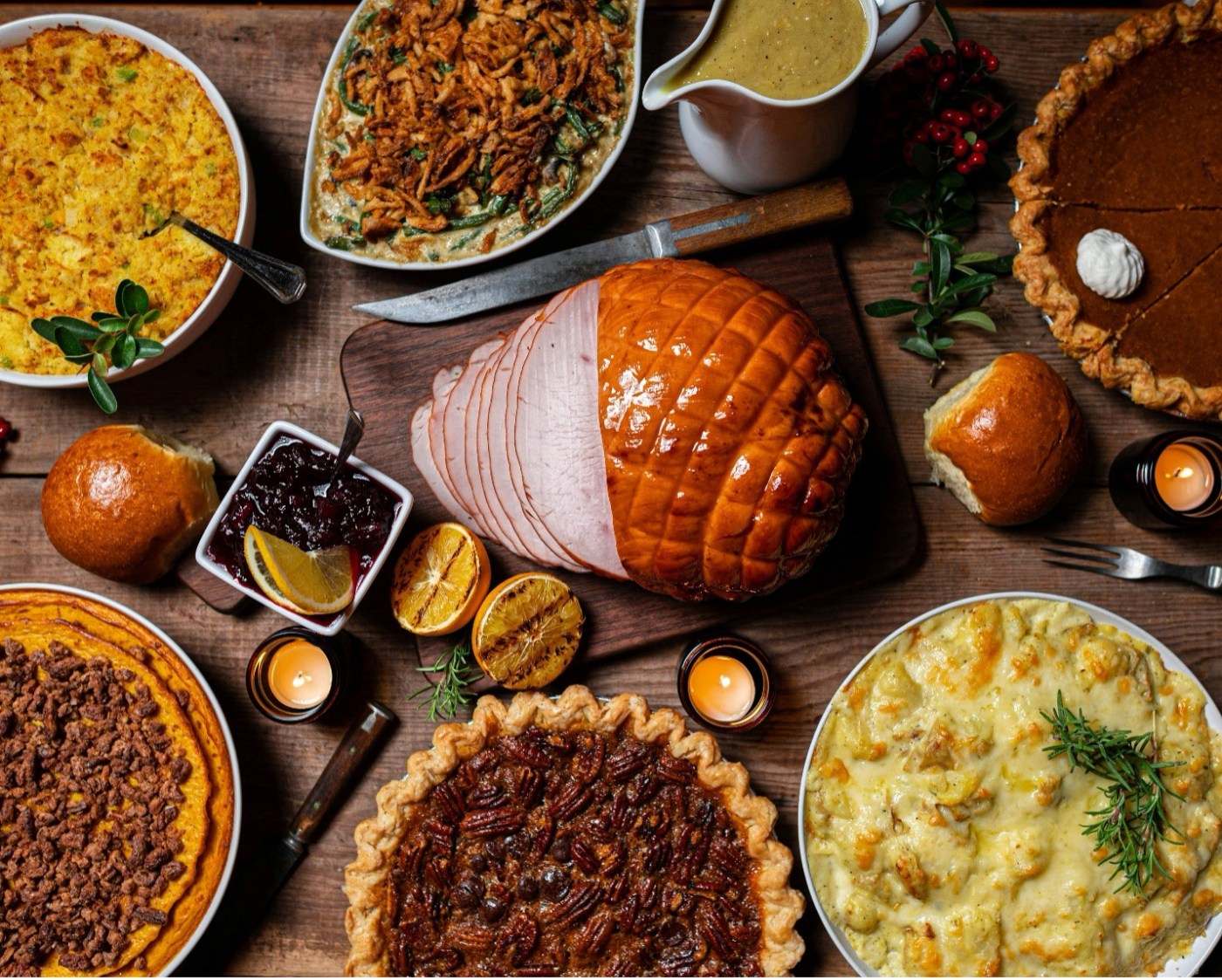
If you’ve ever stuffed your face with food during the holidays or had a particularly indulgent dinner, you know that sometimes you fall into a post-meal food coma – you feel lethargic, drowsy, and sometimes you may even fall asleep after eating a lot. While you might have heard that tryptophan is to blame for your Thanksgiving turkey food coma, this is actually not true. As explained in this previous post, the myth comes from the idea that tryptophan can be converted into a chemical that your brain uses in processes like relaxation and sleep. However, there’s simply not enough tryptophan in a serving of turkey to put you into a food coma. Instead, it’s likely that the copious amounts of carbohydrates and fats you just gobbled up are the culprit. But how does the large amount of these nutrients in your gut make you sleepy, and more importantly how does the information that they are there make it all the way from your stomach to your brain? To help answer this, one recent paper is the first to describe a neural pathway connecting the stomach to the brain that promotes sleep after a big meal.1
Thinking with your stomach
As it turns out, your stomach and intestines, collectively known as the gut, have an entire neural network called the enteric nervous system that has several hundred million neurons!2 When food first enters your stomach, there are neurons that can detect how much it stretches, as well as what kind of food you ate. For instance, some neurons only fire when carbs are present, and others only if fats or proteins are present. For a long time, scientists have studied how these sensory neurons in the stomach and intestines can help regulate hunger and eating behavior, but until recently, it was unknown how the enteric nervous system in the gut talks to the brain to promote sleep after a big meal. Enter the vagus nerve.
The vagus nerve collects sensory information from the gut about the size and content of a meal and acts like a neural highway to quickly relay that information from the enteric nervous system to the brain. Once in the brain, the vagus nerve connects to an area called the Nucleus of the Solitary Tract or NTS in the brainstem. The NTS is an interesting brain region because it sends signals to many different areas throughout the brain, including numerous areas known to help regulate sleep and wakefulness.3 However, very little is known about the connections between the NTS and sleep areas. Because of this, the authors of a recent study wondered whether the stomach-to-vagus-to-NTS neural pathway could help explain why a large meal sends you into a food coma.
The next big bite
To address this, the researchers first found that after food-deprived mice ate a large meal, they slept more. In other words, mice experience food comas too! Now that they’d demonstrated that mice experience food comas, they next asked what brain activity is associated with food comas. Excitingly, they found that neurons in the NTS became very activated during a food coma, and also that by blocking signals coming from the vagus nerve, they could prevent this NTS activation. This suggested to the researchers that the vagus nerve and NTS likely play a role in promoting sleep after eating.
It makes sense that the vagus nerve and NTS would be involved in sending you into a food coma, but there were still more details to unravel. The researchers next wanted to know where in the gut the signals promoting sleep were coming from. Since the vagus nerve collects signals from many different organs, it has different subgroups of neurons that talk to these different organs. For instance, one group of vagus nerve neurons only talks to the stomach, while another only talks to the intestines.1 To determine whether vagus signals from the stomach or intestines are more important for a food coma, the researchers artificially activated these neurons in separate experiments. Surprisingly, they found that the stomach vagus neurons, but not the intestine vagus neurons, were able to increase the amount of sleep when activated!
Finally, to complete the stomach-to-vagus-to-NTS food coma neural pathway, the researchers next wanted to know which sleep centers in the brain receive signals from the NTS. They found that the NTS neurons that send signals to the hypothalamus, but not other areas, were able to promote sleep when artificially activated.
So to summarize, they found a multi-step pathway that promotes food comas. First, food enters the stomach which detects the size and contents of the meal. These signals are sent along the vagus nerve to the NTS in the brainstem. Then the NTS relays these signals to sleep areas in the hypothalamus which cause you to feel drowsy and fall asleep, in what we know as a food coma. So the next time you feel sleepy after a big meal, remember that it’s your stomach talking directly to your brain that makes you feel that way!
References
- Chen, K., Xiang, G., Hang, Z., Wang, G., Zhang, Y., Tang, Z., Huang, B., Li, X., Zhang, D. The gut vagal sensory pathway drives postprandial sleep via activation of PVH-projecting GABAergic neurons in the NTS. Nature Communications, 2025.
- Furness, J.B. The enteric nervous system and neurogastroenterology. Nature Reviews Gastroenterology and Hepatology
- Holt, M., The ins and outs of the caudal nucleus of the solitary tract: An overview of cellular populations and anatomical connections. Journal of Neuroendocrinology, 2022.
Cover image by Jed Owen via Unsplash.com
 PennNeuroKnow
Another excellent column, one of many th
LikeLike