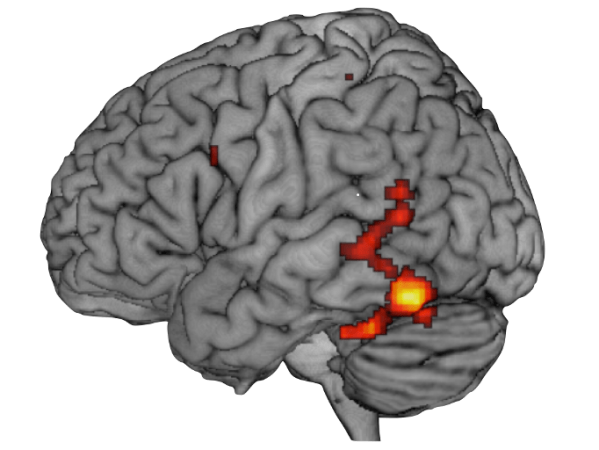
Even though it is a myth that people are either “left-brained” or “right-brained,” certain complex functions, such as spoken language, are primarily found on one side of the human brain. How and why does the brain pick a side for these functions?
Talking to ourselves: The neuroscience behind the voice in our heads
Your ability to communicate with yourself is an influential part of day-to-day life. Research is beginning to uncover how inner speech works, how you can leverage it to improve your life, and what happens when a brain can’t quite recognize its own voiceover.
In Sync: The Neuroscience of Successful Communication
What is happening differently in our brains when conversations click versus when they don’t?
Aphasia as a Symptom of Autoimmune Encephalitis
Many types of brain injury and disease, including autoimmune encephalitis, can cause a language disorder named aphasia that affects at least 2 million Americans
The Voice Within
How can brain-computer interfaces be used to restore speech?