Written by: Kara McGaughey
Our thoughts, feelings, and actions are all shaped by chemical messengers in the brain that guide how we behave and respond to the world around us. Oftentimes, when we hear about these chemical choreographers and how they shape behavior, the spotlight falls on big-name neurotransmitters, like dopamine or serotonin. For instance, social media is filled with videos promising that a “dopamine detox” will transform your brain and your life by resetting your focus and supercharging your motivation. While neurotransmitters do play an incredibly important role in controlling how our brains and bodies function, they aren’t the only players in the game. In this post, we’ll explore another kind of chemical messenger found in the brain: neuropeptides.
What are neuropeptides?
Like neurotransmitters, neuropeptides are chemical messengers that help cells in the brain communicate.1 Despite being overshadowed in popular media, neuropeptides are actually the larger of the two types of molecules, coming in at up to 50 times larger than neurotransmitters. This extra bulk means they can carry more information, but also take longer to be produced, released, and broken down.2 So, while neurotransmitters work fast and precisely — like quick, directed text messages between neurons — the signals sent by neuropeptides tend to be slower and longer-lasting.2 Imagine neuropeptides like a podcast, which takes longer to produce and deliver, but can influence a broader audience over time.
While the term “neuropeptide” might not immediately ring a bell, you’ve likely heard of at least one: oxytocin. Often dubbed “the love hormone” because it’s thought to support social bonds and behavior, oxytocin has had its share of media attention.3 Oxytocin, however, is just one of more than 100 known neuropeptides, and the list keeps growing.1 Scientists have identified and explored neuropeptides in an incredible range of animals from invertebrates with simple nervous systems to complex vertebrates like ourselves.4 The fact that neuropeptides appear in so many species hints at how important they are for shaping brain function and behavior.
What behaviors do neuropeptides support?
A better question might be: What behaviors don’t neuropeptides support? These molecules have been linked to a wide range of functions from feeding and sleep to pain, social behavior, and beyond.4-5
Across all of these functions, neuropeptides have one thing in common — they help animals adapt their behavior to meet changing environmental demands. Whether we’re talking about worms with just 302 neurons, mice, or human beings, nervous systems are constantly evaluating the environment and producing appropriate behavior.6 Neuropeptides are one tool the nervous system uses to help perform this behavioral balancing act.
Feeding
When animals get hungry, they need to prioritize behaviors that will get them to food. In roundworms, a neuropeptide called FLP-18 helps to control this behavioral shift. When FLP-18 is released, roundworms become more sensitive to the smell of food, helping them transition from a relatively stationary state into active foraging. In this way, FLP-18 neuropeptides translate an internal need (hunger) into an action that helps the animal meet this demand (searching for food). And while this one example comes from a simple organism, the role neuropeptides play in feeding and feeding disorders, like anorexia or obesity, extends across species.6-8
Sleep
Another important function organisms need to balance is sleep, and the neuropeptide, orexin, is known to play a critical role in transitioning from sleep to wakefulness. In mice, where researchers can easily measure orexin levels in the brain, they’ve detected higher concentrations of orexin while mice were awake and active.9 To test how important orexin really is for promoting wakefulness and suppressing sleep, scientists prevented its release. They found that without orexin signaling, mice fell into disrupted sleep/wake cycles. The mice struggled to stay awake and found themselves drifting off to sleep in inappropriate situations — a pattern of behaviors strikingly similar to narcolepsy in humans.10 As it turns out, it’s more than just a resemblance! Narcolepsy is indeed caused by a loss of orexin-producing neurons, which results in low levels of orexin neuropeptides.11
Pain
Adapting to the environment isn’t just about pursuing the right behaviors, like finding food or staying awake, it also means avoiding the wrong ones. In this way, unpleasant experiences or behavioral states, like pain, also help organisms as they navigate the world. And neuropeptides, like substance P and CGRP, are strongly implicated in the experience of pain. In animal models, injection of substance P produces pain-related behaviors, such as scratching, licking, and agitation.12 Why? A closer look at nerves in the spinal cord suggests that both substance P and CGRP appear to amplify pain signals by increasing the sensitivity of nearby nerve endings.12-14
Beyond animal models, studies have found increased levels of CGRP in the blood and cerebrospinal fluid of human subjects experiencing pain.15 Research also suggests that these neuropeptides are central to more than just the neurobiology of short-term (so-called “acute”) pain. For instance, substance P has been linked to the development of chronic pain and even psychiatric conditions, like depression, anxiety, and post-traumatic stress disorder (PTSD).16
Social roles
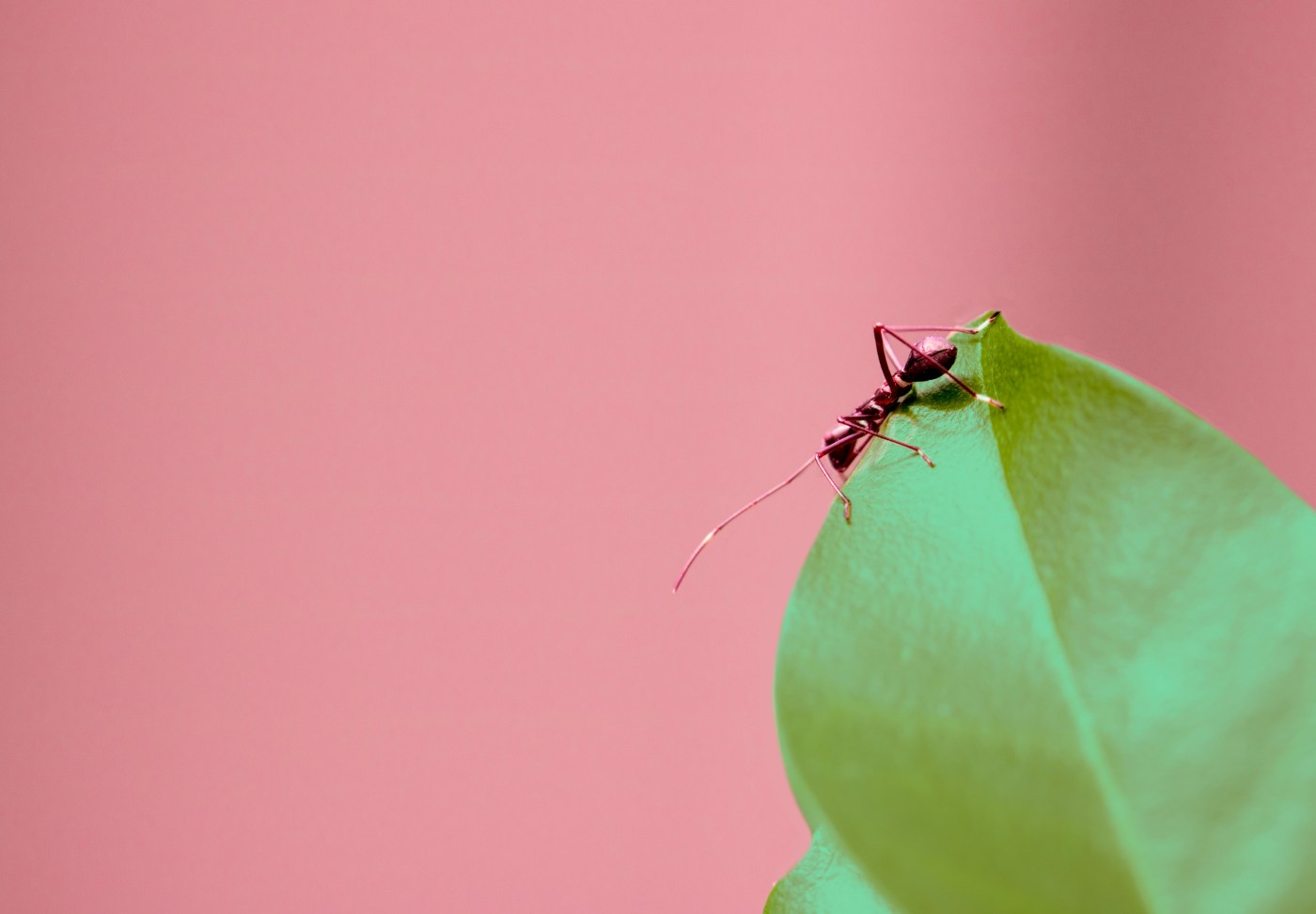
As we know from oxytocin, neuropeptides are also intimately involved in social behavior. A study published last month highlighted the role of a particular neuropeptide, CCAP, in maintaining social roles within a colony of leafcutter ants.17-18 Leafcutter ants are a great animal to study social roles, because they exhibit an especially complex division of labor, with distinct groups dedicated to tasks like defending, caregiving, and harvesting.
Researchers found that different neuropeptides seem to drive these different social roles. For instance, harvester ants had high levels of the neuropeptide CCAP. And, if experimenters removed CCAP from the harvester ants, their leaf-moving behavior was dramatically reduced. Conversely, when defender or caregiver ants were injected with CCAP, they abandoned their usual duties and instead began attempting to carry leaves. While most other animal species don’t have such rigid social castes, the work still underscores the essential role of neuropeptides in both shaping and flexibly reorganizing social behavior.
Could neuropeptides be used to fix behavior gone awry?
Given how successfully neuropeptides were able to reprogram social behavior in leafcutter ants, a natural next question is: How far can we take this? Could we use neuropeptides to adjust or repair other kinds of behavior or behavioral states, like the experience of pain?
Signs are pointing to yes! In fact, one of today’s most high-profile drugs is actually neuropeptide-based. Ozempic has totally transformed weight loss by targeting the neuropeptide GLP-1, which promotes feelings of “fullness.” However, GLP-1 neuropeptides play a role in other reward-related behaviors, like alcohol or drug use, meaning there’s tremendous untapped potential for using GLP-1 drugs in the context of other diseases, like addiction.19 Clinicians are also already using Suvorexant, a drug that blocks orexin activity (which, as we saw, promotes wakefulness), to treat sleep disorders, like insomnia.20 Similarly, drugs that decrease the activity of CGRP, a pain-promoting neuropeptide, are the first class of medications specifically for migraine treatment.21-22 Four of these CGRP-blocking drugs have now been approved by the FDA, and they show strong potential for reducing migraine frequency and severity.22
And all of this is just the beginning! With so many neuropeptides still not yet fully explored, there’s lots of potential for new insights and new treatments.
What’s the takeaway?
Neuropeptides may not be as widely known as neurotransmitters, but their impact on brain function is just as profound. From food-seeking in worms to sleep regulation in mice and social roles in ant colonies, neuropeptides help nervous systems have flexible control over behavior across a wide range of species.
The versatility and evolutionary conservation of neuropeptides also means that even simple organisms can reveal insights with broad biological relevance that may ultimately lead to new ways of treating complex conditions in humans. As research continues, it’s likely we’ll uncover even more ways neuropeptides help organisms adapt their behavior — one chemical signal at a time.
References
- Hökfelt, T., Broberger, C., Xu, Z.-Q. D., Sergeyev, V., Ubink, R., & Diez, M. (2000). Neuropeptides—An overview. Neuropharmacology, 39(8), 1337–1356. https://doi.org/10.1016/S0028-3908(00)00010-1
- Hökfelt, T., Bartfai, T., & Bloom, F. (2003). Neuropeptides: Opportunities for drug discovery. The Lancet Neurology, 2(8), 463–472. https://doi.org/10.1016/S1474-4422(03)00482-4
- Carter, C. S. (2021). Oxytocin and love: Myths, metaphors and mysteries. Comprehensive Psychoneuroendocrinology, 9, 100107. https://doi.org/10.1016/j.cpnec.2021.100107
- Christie, A. E., Stemmler, E. A., & Dickinson, P. S. (2010). Crustacean neuropeptides. Cellular and Molecular Life Sciences: CMLS, 67(24), 4135–4169. https://doi.org/10.1007/s00018-010-0482-8
- Bhat, U. S., Shahi, N., Surendran, S., & Babu, K. (2021). Neuropeptides and Behaviors: How Small Peptides Regulate Nervous System Function and Behavioral Outputs. Frontiers in Molecular Neuroscience, 14, 786471. https://doi.org/10.3389/fnmol.2021.786471
- Cohen, M., Reale, V., Olofsson, B., Knights, A., Evans, P., & Bono, M. de. (2009). Coordinated Regulation of Foraging and Metabolism in C. elegans by RFamide Neuropeptide Signaling. Cell Metabolism, 9(4), 375–385. https://doi.org/10.1016/j.cmet.2009.02.003
- Jimerson, D. C., & Wolfe, B. E. (2004). Neuropeptides in Eating Disorders. CNS Spectrums, 9(7), 516–522. https://doi.org/10.1017/S1092852900009603
- Gehlert, D. R. (1999). Role of hypothalamic neuropeptide Y in feeding and obesity. Neuropeptides, 33(5), 329–338. https://doi.org/10.1054/npep.1999.0057
- Hung, C., & Yamanaka, A. (2023). The role of orexin neuron activity in sleep/wakefulness regulation. Peptides, 165, 171007. https://doi.org/10.1016/j.peptides.2023.171007
- Kornum, B. R., Knudsen, S., Ollila, H. M., Pizza, F., Jennum, P. J., Dauvilliers, Y., & Overeem, S. (2017). Narcolepsy. Nature Reviews Disease Primers, 3(1), 16100. https://doi.org/10.1038/nrdp.2016.100
- Mahoney, C. E., Cogswell, A., Koralnik, I. J., & Scammell, T. E. (2019). The neurobiological basis of narcolepsy. Nature Reviews. Neuroscience, 20(2), 83–93. https://doi.org/10.1038/s41583-018-0097-x
- Partridge, B. J., Chaplan, S. R., Sakamoto, E., & Yaksh, T. L. (1998). Characterization of the Effects of Gabapentin and 3-Isobutyl-γ-Aminobutyric Acid on Substance P-induced Thermal Hyperalgesia. Anesthesiology, 88(1), 196. https://doi.org/10.1097/00000542-199801000-00028
- Graefe, S. B., Rahimi, N., & Mohiuddin, S. S. (2025). Substance P Biochemistry. In StatPearls. StatPearls Publishing. http://www.ncbi.nlm.nih.gov/books/NBK554583/
- Bird, G. C., Han, J. S., Fu, Y., Adwanikar, H., Willis, W. D., & Neugebauer, V. (2006). Pain-Related Synaptic Plasticity in Spinal Dorsal Horn Neurons: Role of CGRP. Molecular Pain, 2, 1744-8069-2–31. https://doi.org/10.1186/1744-8069-2-31
- Schou, W. S., Ashina, S., Amin, F. M., Goadsby, P. J., & Ashina, M. (2017). Calcitonin gene-related peptide and pain: A systematic review. The Journal of Headache and Pain, 18(1), 34. https://doi.org/10.1186/s10194-017-0741-2
- Humes, C., Sic, A., & Knezevic, N. N. (2024). Substance P’s Impact on Chronic Pain and Psychiatric Conditions—A Narrative Review. International Journal of Molecular Sciences, 25(11), 5905. https://doi.org/10.3390/ijms25115905
- Neuropeptides reprogram social roles in leafcutter ants. (2025, July 11). The Transmitter: Neuroscience News and Perspectives. https://www.thetransmitter.org/social-behavior/neuropeptides-reprogram-social-roles-in-leafcutter-ants/
- Gilbert, M. B., Glastad, K. M., Fioriti, M., Sorek, M., Scarpa, T., Purnell, F. S., Xu, D., Pino, L. K., Korotkov, A., Biashad, A., Baeza, J., Lauman, R., Filippova, A., Kacsoh, B. Z., Bonasio, R., Mathis, M. W., Garcia, B. A., Seluanov, A., Gorbunova, V., & Berger, S. L. (2025). Neuropeptides specify and reprogram division of labor in the leafcutter ant Atta cephalotes. Cell, 188(15), 3974-3991.e21. https://doi.org/10.1016/j.cell.2025.05.023
- Hayes, M. R., & Schmidt, H. D. (2016). GLP-1 influences food and drug reward. Current Opinion in Behavioral Sciences, 9, 66–70. https://doi.org/10.1016/j.cobeha.2016.02.005
- Han, A. H., Burroughs, C. R., Falgoust, E. P., Hasoon, J., Hunt, G., Kakazu, J., Lee, T., Kaye, A. M., Kaye, A. D., & Ganti, L. (n.d.). Suvorexant, a Novel Dual Orexin Receptor Antagonist, for the Management of Insomnia. Health Psychology Research, 10(5), 67898. https://doi.org/10.52965/001c.67898
- American Headache Society Position Statement: Calcitonin Gene-Related Peptide (CGRP) Inhibitors should now be considered a first-line option for migraine prevention—Association of Migraine Disorders. (n.d.). Retrieved August 2, 2025, from https://www.migrainedisorders.org/ahs-statement-cgrp/
- Rissardo, J. P., & Caprara, A. L. F. (2022). Gepants for Acute and Preventive Migraine Treatment: A Narrative Review. Brain Sciences, 12(12), Article 12. https://doi.org/10.3390/brainsci12121612
Cover photo by Sian Cooper from UnSplash
 PennNeuroKnow
Nice post
LikeLiked by 1 person