July 15th, 2024
Written by: Andrew Nguyen
Understanding Mosquito Behavior and How It Impacts Us
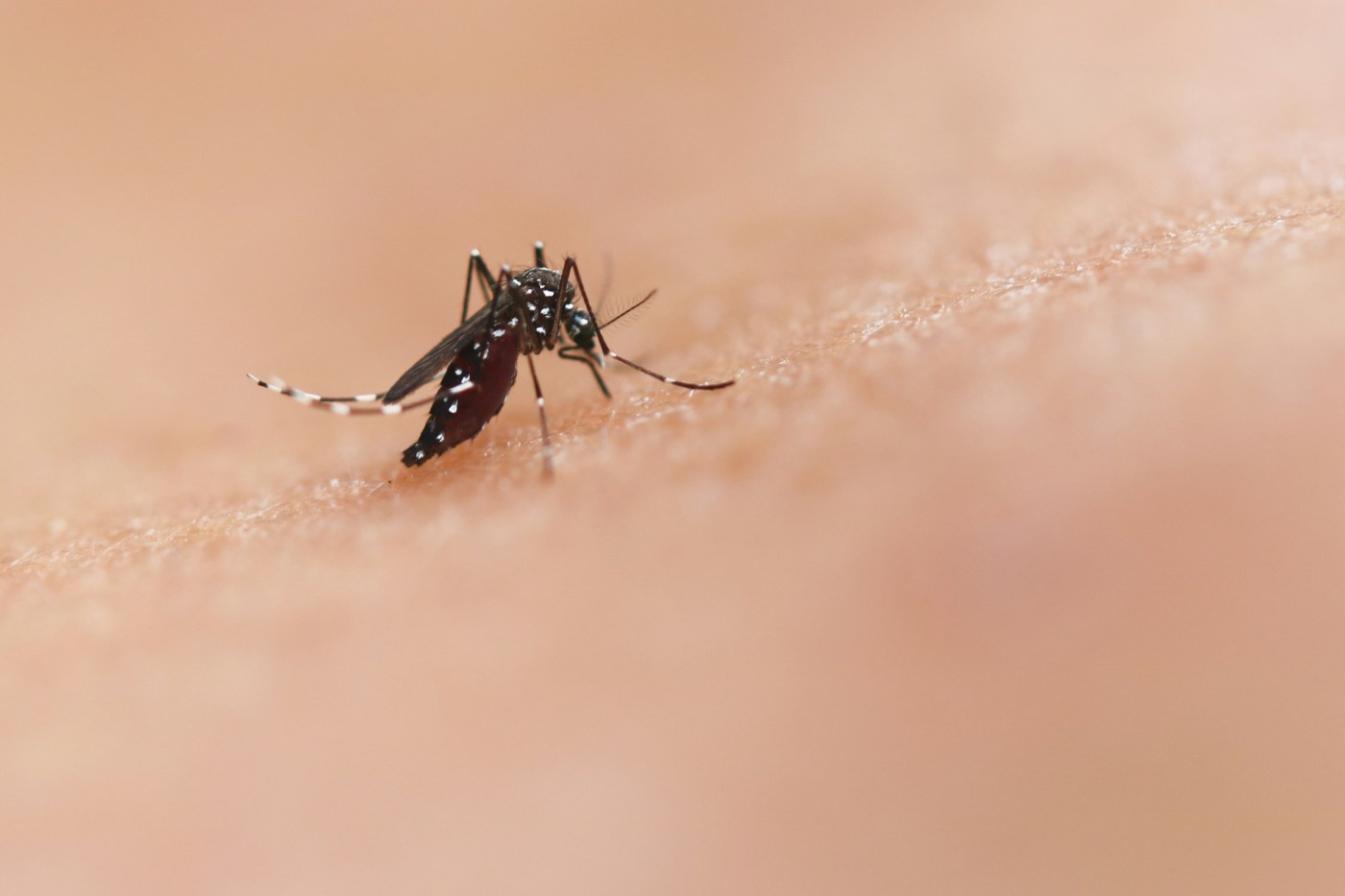
There’s nothing quite like spending a warm summer outdoors, enjoying the fresh air and sun on your skin. Everything feels peaceful and fun, that is until the buzzing in your ear starts and there’s that familiar itchy sensation all over. Mosquito bites are more than just a nuisance—they’re carriers of serious diseases like West Nile, Zika, Malaria, and Dengue viruses, which can be deadly. Despite efforts to control these diseases, they remain common in many parts of the world. Mosquitoes are incredibly effective at finding their next meal due to their evolved host-seeking behaviors1. Understanding how mosquitoes sense their targets, how insect repellents work, and what drives these pesky behaviors is a big question for scientists to tackle to help stop the spread of mosquito-borne diseases.
Why Do Mosquitoes Feed on Our Blood?
Ever wonder why mosquitoes are so determined to feast on our blood? It’s not just to ruin our outdoor fun. Mosquitoes don’t just feed on our blood, actually both male and female mosquitoes typically feed on plant nectar, only female mosquitoes actually feed on blood. Female mosquitoes need the proteins found in blood to develop their eggs, making our blood essential for their reproduction2. The females will go through cycles of blood-feeding and egg-laying throughout their lives. After a blood meal, the females will start laying eggs and their drive to seek out blood becomes lower during this time. Once their eggs are laid, they will continue on with this cycle to find their next host to feed on and lay more eggs. Going from one host to the next, taking in blood from someone new each time they are preparing to lay eggs, is part of what makes these bloodsuckers so good at spreading diseases between humans3.
How Mosquitoes Find Their Hosts
Mosquitoes use a combination of cues to find their hosts, including body temperature, carbon dioxide (CO2) production, host odors, and visual cues1,4,5,6. Among the many mosquito species, Aedes aegypti is one of the most common and is particularly known for spreading diseases because it prefers human blood. This preference for human blood is an important area for research. Understanding how the preference for human blood came about in these mosquitoes might help lead us to solutions to repel these insects from humans, thereby reducing the risk for mosquito-borne illnesses. To study how mosquitoes track down their next host, many neuroscientists have turned to using the Aedes aegypti in the lab to research the neural circuits and molecules involved in host-seeking behaviors1.
Scientists believe that host odors play a big role in identifying human preferences. By genetically modifying mosquitoes to disrupt their odorant receptors, researchers found that these mosquitoes still responded to CO2 but no longer preferred humans. This suggests that odorant receptors are crucial for distinguishing humans from other animals. Additionally, when these genetically modified mosquitoes were exposed to DEET, a common ingredient in insect repellents, they were able to track down human targets but became repelled after landing on their skin, indicating that DEET works through odorant receptors to repel mosquitoes1.
Suppressing Host-Seeking Behavior
After a female mosquito takes a blood meal, she doesn’t seek out another host immediately. There is a sustained period of time where she is so caught up in egg laying that she doesn’t seek out a blood meal2. Understanding the neuroscience behind why the females stop seeking a new blood meal could help us find better ways to prevent mosquito bites. If we know more about what happens in the mosquito brain during this period of suppressed host-seeking, we can apply that understanding to design better insect repellants or even create genetically modified mosquitoes that could help make the population less attracted to humans.
Ongoing research in this area has shed light on some of the signaling molecules involved in relaying information about this period of suppressed host-seeking behavior2. Some creative scientists discovered that if they injected the blood from recently blood-fed mosquitoes into mosquitoes that have not had a blood meal, this suppresses their host-seeking behavior. This suggests that there may be molecules in the mosquito blood that may be important initiators of this behavioral suppression. Small molecules called peptides can be found in the circulatory system and are important for relaying information to the brain to drive or suppress behavior. Recent work has shown that the suppression of host-seeking behaviors in female mosquitoes is linked to neuropeptides in the Neuropeptide Y (NPY) family, which are involved in feeding and satiety behaviors across many species. By using drugs and genetic modifications to alter NPY signaling, researchers identified specific NPY receptors involved in maintaining host-seeking behaviors. Manipulating these receptors through either genetic engineering or drugs targeting this specific receptor, suppressed the urge to find a new blood host2.
With these new findings, we can apply this knowledge to create better, more powerful insect repellants that target these receptors, tricking these animals into thinking they have already had a blood-meal and that they don’t need to seek out another. Applying this neuroscience research in the real world can be useful in reducing mosquito bites and the spread of mosquito-transmitted diseases.
References
- DeGennaro, M., McBride, C., Seeholzer, L. et al. orco mutant mosquitoes lose strong preference for humans and are not repelled by volatile DEET. Nature 498, 487–491 (2013). https://doi.org/10.1038/nature12206
- Duvall LB, Ramos-Espiritu L, Barsoum KE, Glickman JF, Vosshall LB. Small-Molecule Agonists of Ae. aegypti Neuropeptide Y Receptor Block Mosquito Biting. Cell. 2019 Feb 7;176(4):687-701.e5. doi: 10.1016/j.cell.2018.12.004. PMID: 30735632; PMCID: PMC6369589.
- https://www.orkin.com/pests/mosquitoes/what-do-mosquitoes-eat
- Corfas RA, Vosshall LB. The cation channel TRPA1 tunes mosquito thermotaxis to host temperatures. Elife. 2015 Dec 15;4:e11750. doi: 10.7554/eLife.11750. PMID: 26670734; PMCID: PMC4718722.
- McMeniman CJ, Corfas RA, Matthews BJ, Ritchie SA, Vosshall LB. Multimodal integration of carbon dioxide and other sensory cues drives mosquito attraction to humans. Cell. 2014 Feb 27;156(5):1060-71. doi: 10.1016/j.cell.2013.12.044. PMID: 24581501; PMCID: PMC4007582.
- Zhao, Z., Zung, J.L., Hinze, A. et al. Mosquito brains encode unique features of human odour to drive host seeking. Nature 605, 706–712 (2022). https://doi.org/10.1038/s41586-022-04675-4
Cover Photo by National Institute of Allergy and Infectious
 PennNeuroKnow
Leave a comment