
August 25, 2026
Written by Stephen Wisser
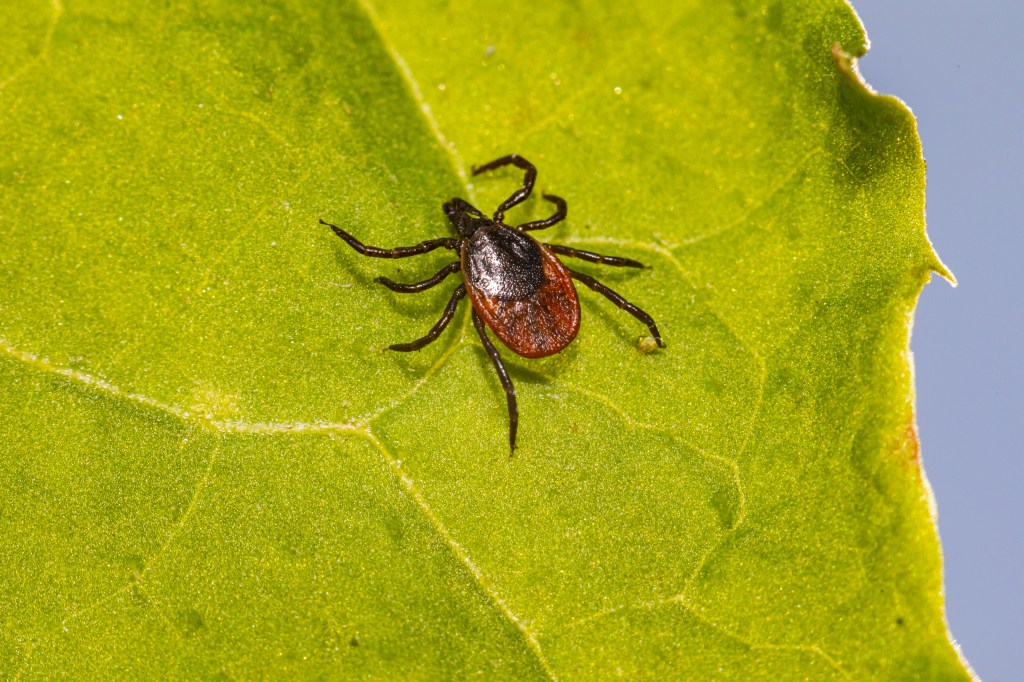
This summer while hiking in a Pennsylvania state park, I came across a sign at the trail head describing appropriate tick prevention and removal strategies. As someone who grew up in Pennsylvania, I immediately knew it was about preventing Lyme disease, a bacterial infection passed onto humans via tick bites. What stuck with me in this moment however, was the fact that we still needed this sign. I expected that in the roughly 20 years since my childhood, Lyme disease treatments would have progressed enough to make this a rare disease for the unlucky few. Boy was I wrong!
After reviewing the scientific literature, posts by advocacy groups, and documentaries, I realized Lyme disease is still very much a problem. In some ways, there are even more questions now surrounding the disease and how the bacteria that causes Lyme in the first place might stick around. A previous PennNeuroKnow post in this blog presented a wide overview of Lyme disease, and in the six years since that post a lot has happened. Here, I’ll focus specifically on the newest and arguably most controversial topic of the Lyme story: what happens when symptoms persist after someone is treated.
The beginnings of Lyme disease in America
In 1975, two mothers in the town of Lyme, Connecticut became concerned about a growing number of neighborhood children seemingly showing signs of arthritis1. By 1983 a government scientist who was dispatched to the region had identified a specific bacteria that was to blame: Borreliella burgdorferi1. We now know that this bacteria is passed to humans via infected ticks and can result in Lyme disease. In the present day, after an initial infection, treatment with standard antibiotics is normally enough to stop the bacteria from causing further harm. While the bacteria itself does not produce harmful toxins, if not treated soon after infection it can travel to other organs like the heart and brain, where it can cause a strong immune response. This inflammatory response in the brain is believed to injure and potentially cause long-lasting damage to healthy neurons, which in turn can lead to a host of neurological issues2.
Into the Lyme light: The controversy around chronic Lyme
While the vast majority of patients who get Lyme disease react well to antibiotics, about 10-20% continue to experience symptoms following treatment. These symptoms include fatigue, pain (headaches and back pain), cognitive difficulties, anxiety and depression3. Since the beginning of documented Lyme disease cases, the idea that Lyme disease could be a chronic condition was not generally accepted by the medical community, and consequently, people who continued to experience profound neurological issues long after initial infection were ignored.
This oversight by the medical field eventually received national attention through a 2008 documentary titled Under Our Skin. The documentary follows several patients who describe long-lasting complications from Lyme and their struggle to be taken seriously by the medical field at that time. A common experience amongst these patients is doctors telling them that long-term symptoms of Lyme aren’t due to a continuing Lyme infection, but rather attributed to another disease or are simply “in their head”.
The medical authority on Lyme disease was and continues to be the Infections Diseases Society of America (IDSA). At the time of the documentary’s release, the IDSA’s guidance for treating Lyme was simply a 10-14 day course of antibiotics with no consideration given for long-term symptoms4. In the 2006 IDSA guidelines, it is specifically stated that “posttreatment symptoms appear to be more related to the aches and pains of daily living rather than to either Lyme disease or a tickborne coinfection” 4. Scientific consensus then was that a bacterial infection after antibiotic treatment was not likely, and thus long-term antibiotic retreatment was inappropriate5.
However—though details surrounding the exact treatment plans are lacking—in Under Our Skin, the followed patients find doctors willing to go against the establishment and provide more intensive treatment, including longer term and even IV antibiotics. The documentary shows how many of the patients improve following more intensive treatment, and it paints a picture of medical negligence and alleged corruption by conflict of interest. For example, some Lyme Advocacy groups claim authors of the IDSA guidelines have too many corporate connections6 that could hinder their ability to make objective guidance for diagnosis and treatment. While this documentary makes for compelling cinema, legitimate scientific studies and physicians are cited to support the idea that continuing symptoms of Lyme disease is a legitimate condition, which made patients and the scientific community turn their attention to understanding how this happens.
Long-term Lyme today
Almost 20 years later, long-term symptoms of Lyme after treatment and the existence of “chronic” Lyme disease remain controversial. In the most recent IDSA guidelines published in 2021, the list of contributing experts includes authors who continue to reject the existence of long-term Lyme symptoms. In these most recent guidelines, discussion of Lyme symptoms after an initial treatment has been completely removed;7 there is no discussion either supporting or negating the existence of chronic Lyme. Nonetheless, today there is growing evidence showing that up to 20% of people who contract Lyme disease will experience some form of a long-lasting symptom, like sleep disruption, fatigue, and pain. This condition is now generally referred to as post-treatment Lyme disease (PTLD), and although there is no official guidance for diagnosing PTLD, a growing number of scientists now recognize it as a legitimate condition1. A general scoring system for PTLD was even recently developed and is being used in the scientific community8.
While there has been a change of perspective in the scientific community, there is still more progress to be made in medical providers’ recognition and awareness of PTLD. Understanding the mechanisms underlying PTLD would provide more legitimacy to this condition and shed light for potential treatments. This begs the key question: how does one get PTLD? In the latter part of this post, we’ll explore the recent progress in answering this question.
Inflammation & the brain
Lyme disease is known to cause inflammation, specifically in the thin layers of tissue that protect the brain called meninges. But how this inflammation might cause certain symptoms of PTLD, like mood and cognitive problems, remains unclear. In a recently published study9, scientists began to answer this question by studying Lyme disease in mice. In this experiment, scientists injected Borreliella burgdorferi into the skin of the animals and found, as expected, that the bacteria quickly went to and caused inflammation in certain parts of the meninges. Interestingly, while the bacteria was not found in the brain itself, it nonetheless caused an increase in certain genes associated with inflammation in the brain, which as discussed previously can damage healthy neurons. Indeed, based on previous research, increases of these same genes are known to cause fatigue, irritability, and cognitive issues – many of the same symptoms associated with PTLD. So, while the bacteria doesn’t get into the brain itself, it triggers genetic changes in the brain that might underly some of the symptoms seen in PTLD patients.
One step back: Causes of inflammation
If inflammation can change what genes are turned on, and that can lead to PTLD-like symptoms, what starts that whole process? In other words, what causes that inflammation to begin with? If those causes can be identified and the consequent inflammation can be prevented or treated, perhaps lasting symptoms of Lyme can be too. One theory that continues to divide the scientific community is the idea that the Borreliella burgdorferi bacteria itself might still be around after a course of antibiotic treatment and thus continue to cause inflammation. It is generally accepted that foreign “bugs” like the Lyme bacteria cause an inflammation response. So in theory, if you kill off those bugs with antibiotics, the inflammation should stop. This is why deniers of PTLD believe they are right: antibiotics kill off the Borreliella burgdorferi, so they believe there is nothing left to cause continuing inflammation and symptoms.
Although active Borreliella burgdorferi presence in humans is difficult to directly measure, in two human studies involving Lyme patients that continued to experience symptoms, another 90-day round of antibiotics did not reduce their Lyme symptoms1,10. These authors claim that they did not detect the bacteria in these patients, so instead the symptoms must be caused by something else. But studies in animals have found evidence of Borreliella burgdorferi after treatment with antibiotics11–13, suggesting that in mammals the bacteria itself can survive antibiotics.
While these experiments regarding the bacteria itself are contradictory, a recent study suggests a new mechanism that may be able to reconcile these differences. Just last year, scientists made the shocking discovery that a part of the Borreliella burgdorferi bacteria known as the cell wall can stay in an infected mouse’s liver for weeks14. Therefore, while Borreliella burgdorferi bacteria from a tick bite might be killed by antibiotics, pieces of the dead bacteria, such as its cell wall, could stay behind. These scientists found that these cell wall pieces have a special shape that allows them to stay in the liver, and cause the body to think that there is still an invader that needs to be destroyed. Indeed, just these cell wall pieces themselves were able to cause inflammation, specifically in joints, and alter genes involved in inflammation and energy production14.
This cell wall theory gives a compelling explanation for PTLD and provides a path for both PTLD opponents and proponents to be right: the bacteria itself might not be alive after an initial antibiotic course, but the remaining pieces of cell wall can cause lasting symptoms. More research is needed to strengthen this hypothesis, and a main question continues to be why some people develop PTLD while others don’t if they all encounter the bacteria.
“What’s next?” Sublime hope for Lyme
These recent animal studies have gone a long way in legitimizing PTLD and make effective PTLD treatments seem like a not-so-distant reality. But as we continue to develop a better understanding of mechanisms, what may potential treatments look like? Perhaps antibiotics will reenter the conversation, or perhaps some new drug that targets remaining Borreliella burgdorferi cell walls will be proposed.
In the meantime, one group of scientists is investigating a unique approach that has been gaining popularity: psilocybin. As the main ingredient in psychedelic “magic” mushrooms, psilocybin has shown evidence of anti-anxiety, anti-depression, and anti-inflammatory properties, all things that PTLD patients suffer from. Just a few months ago, a study in 20 people with PTLD revealed that two doses of psilocybin decreased PTLD symptoms and generally improved quality of life15. These positive effects were still present six months after the experiment15, suggesting the treatment may have longer term effects.
While research has yet to explain how psilocybin leads to improvements on a biological level, it shows promise for PTLD as a drug that is already gaining widespread momentum for a variety of other diseases. While progress might seem slow for people affected by chronic Lyme, it’s clear that in just the last five years we’ve learned a lot about this unique condition through the efforts of advocates, persevering patients and groups of dedicated scientists— not bad for a disease that some deny.
References
1. Bobe, J.R., Jutras, B.L., Horn, E.J., Embers, M.E., Bailey, A., Moritz, R.L., Zhang, Y., Soloski, M.J., Ostfeld, R.S., Marconi, R.T., et al. (2021). Recent Progress in Lyme Disease and Remaining Challenges. Front. Med. 8, 666554. https://doi.org/10.3389/fmed.2021.666554.
2. Rupprecht, T.A., Koedel, U., Fingerle, V., and Pfister, H.-W. (2008). The Pathogenesis of Lyme Neuroborreliosis: From Infection to Inflammation. Mol Med 14, 205–212. https://doi.org/10.2119/2007-00091.Rupprecht.
3. Marques, A. (2008). Chronic Lyme Disease: A Review. Infectious Disease Clinics of North America 22, 341–360. https://doi.org/10.1016/j.idc.2007.12.011.
4. Wormser, G.P., Dattwyler, R.J., Shapiro, E.D., Halperin, J.J., Steere, A.C., Klempner, M.S., Krause, P.J., Bakken, J.S., Strle, F., Stanek, G., et al. (2006). The Clinical Assessment, Treatment, and Prevention of Lyme Disease, Human Granulocytic Anaplasmosis, and Babesiosis: Clinical Practice Guidelines by the Infectious Diseases Society of America. Clinical Infectious Diseases 43, 1089–1134. https://doi.org/10.1086/508667.
5. Stanek, G., Wormser, G.P., Gray, J., and Strle, F. (2012). Lyme borreliosis. The Lancet 379, 461–473. https://doi.org/10.1016/S0140-6736(11)60103-7.
6. Mervine, P. (2017). Conflicts of interest make Wormser wrong choice for Lyme panel. lymedisease.org. https://www.lymedisease.org/wormser-wrong-choice-lyme-panel/.
7. Lantos, P.M., Rumbaugh, J., Bockenstedt, L.K., Falck-Ytter, Y.T., Aguero-Rosenfeld, M.E., Auwaerter, P.G., Baldwin, K., Bannuru, R.R., Belani, K.K., Bowie, W.R., et al. (2021). Clinical Practice Guidelines by the Infectious Diseases Society of America (IDSA), American Academy of Neurology (AAN), and American College of Rheumatology (ACR): 2020 Guidelines for the Prevention, Diagnosis and Treatment of Lyme Disease. Clinical Infectious Diseases 72, e1–e48. https://doi.org/10.1093/cid/ciaa1215.
8. Fallon, B.A., Zubcevik, N., Bennett, C., Doshi, S., Rebman, A.W., Kishon, R., Moeller, J.R., Octavien, N.R., and Aucott, J.N. (2019). The General Symptom Questionnaire-30 (GSQ-30): A Brief Measure of Multi-System Symptom Burden in Lyme Disease. Front. Med. 6, 283. https://doi.org/10.3389/fmed.2019.00283.
9. Casselli, T., Divan, A., Vomhof-DeKrey, E.E., Tourand, Y., Pecoraro, H.L., and Brissette, C.A. (2021). A murine model of Lyme disease demonstrates that Borrelia burgdorferi colonizes the dura mater and induces inflammation in the central nervous system. PLoS Pathog 17, e1009256. https://doi.org/10.1371/journal.ppat.1009256.
10. Klempner, M.S., Hu, L.T., Evans, J., Schmid, C.H., Johnson, G.M., Trevino, R.P., Norton, D., Levy, L., Wall, D., McCall, J., et al. (2001). Two Controlled Trials of Antibiotic Treatment in Patients with Persistent Symptoms and a History of Lyme Disease. N Engl J Med 345, 85–92. https://doi.org/10.1056/NEJM200107123450202.
11. Straubinger, R.K., Summers, B.A., Chang, Y.F., and Appel, M.J. (1997). Persistence of Borrelia burgdorferi in experimentally infected dogs after antibiotic treatment. J Clin Microbiol 35, 111–116. https://doi.org/10.1128/jcm.35.1.111-116.1997.
12. Embers, M.E., Barthold, S.W., Borda, J.T., Bowers, L., Doyle, L., Hodzic, E., Jacobs, M.B., Hasenkampf, N.R., Martin, D.S., Narasimhan, S., et al. (2012). Correction: Persistence of Borrelia burgdorferi in Rhesus Macaques following Antibiotic Treatment of Disseminated Infection. PLoS ONE 7. https://doi.org/10.1371/annotation/4cafed66-fb84-4589-a001-131d9c50aea6.
13. Hodzic, E., Imai, D., Feng, S., and Barthold, S.W. (2014). Resurgence of Persisting Non-Cultivable Borrelia burgdorferi following Antibiotic Treatment in Mice. PLoS ONE 9, e86907. https://doi.org/10.1371/journal.pone.0086907.
14. McClune, M.E., Ebohon, O., Dressler, J.M., Davis, M.M., Tupik, J.D., Lochhead, R.B., Booth, C.J., Steere, A.C., and Jutras, B.L. (2025). The peptidoglycan of Borrelia burgdorferi can persist in discrete tissues and cause systemic responses consistent with chronic illness. Sci. Transl. Med.
15. Garcia-Romeu, A., Naudé, G.P., Rebman, A.W., So, S., Yaffe, A., Geithner, I., Kozero, E.A., Yang, T., Soloski, M.J., and Aucott, J.N. (2026). Pilot study of psilocybin in patients with post-treatment lyme disease. Sci Rep 16, 7497. https://doi.org/10.1038/s41598-026-38091-9.
Artificial Intelligence was not used in this post.
Cover Image by Erik Karits from Pixabay

