
May 26th, 2026
Written by Sophia Castellani
When is more (or less) drug better?
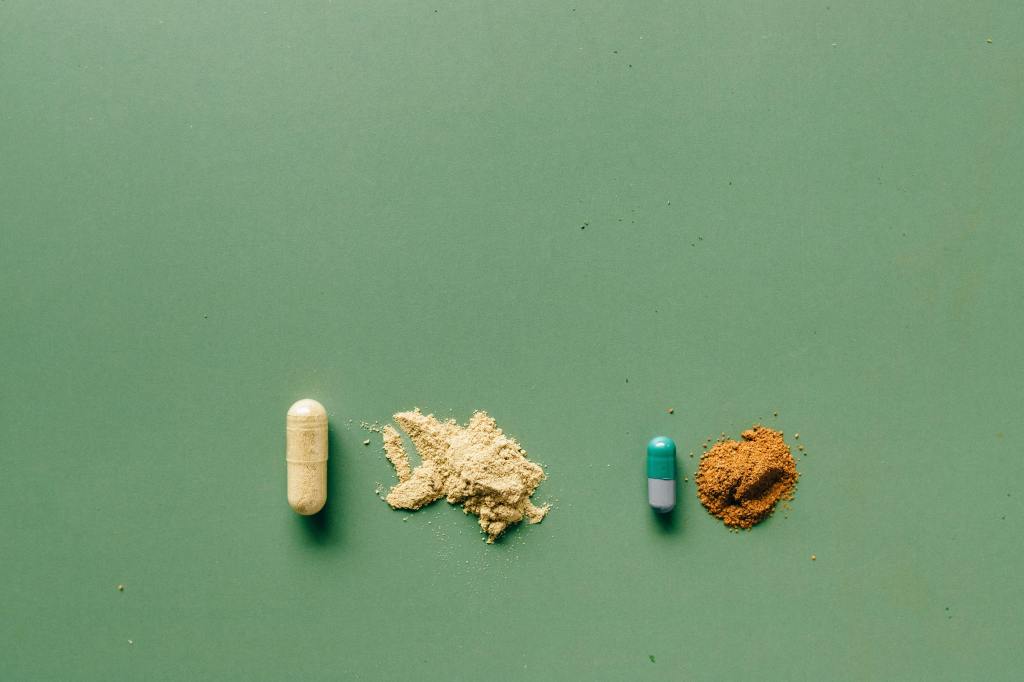
When people think of the word drug they often think of danger and addiction, or even the infamous fried egg from the this is your brain on drugs campaign, however, in neuroscience the meaning of a drug goes beyond this. From the caffeine in coffee, to antidepressants or recreational substances, a drug describes any chemical that we take that can change how cells in the brain communicate, as well as how the rest of the body functions.
It is intuitive to think of a drug dose, meaning the specific amount of the drug you take at once, like a volume knob for controlling brain activity: a small amount has a small effect, a bigger amount has a bigger effect. However, recent studies have revealed that the brain and how it responds to drugs is not always that simple. Interestingly, sometimes a low dose can affect brain function in a completely different way than a larger dose. This begs the question: Why?
One reason this may happen is that certain drugs do not spread evenly throughout the brain. Scientists have performed experiments measuring changes in activity across different brain areas in mice after being given a drug, and made the discovery that the same drug can reach some brain regions more easily than others1. These regions play different roles but are interconnected, like how musicians play different instruments but form a band that is able to perform a song. This means that a change in dose can change which regions the drug is able to reach along with its overall effect on the brain. So increasing the dose of the drug may do more than simply produce a louder version of the same effect – instead it can lead to a change in which or how loud each musician is playing to produce an entirely different tune of brain activity.
This concept of a drug’s difference in effects at different doses appears across many areas of neuroscience, and can have real impacts on their use for treating patients. For example, one recent study looked at how treatment for Parkinson’s Disease, a neurological disorder that causes issues with movement control, changed specific brain activity as well as memory performance in patients when given at different doses. The researchers found that too little or too much of the drug treatment was related to lower memory performance2. From this we can learn that more is not always better. There is a sweet spot where the dose works best, and going above or below that spot can change how the brain responds and a patient’s treatment outcome.
Importance of a micro-dose
There is an old adage that sometimes in life, the best things come in the smallest packages. How does this relate to a drug’s effect at different doses?
Neuroscientists have turned to exploring this question through psychedelics, a type of drug that profoundly alters thinking, mood and even how someone experiences reality through effects such as hallucinations. The research points to these compounds as a promising example for exploring how these drugs affect the brain with the goal of harnessing their potential benefits that are separate from the full psychedelic experience. In one study, researchers gave rodents different doses of psilocybin, the psychedelic compound found in “magic mushrooms”, and found their brain activity at each dose produced a distinct pattern of activity in cells throughout the brain. This finding supports the idea that changing the dose not only changes how strongly brain cells respond – it also changes what different parts of the brain communicate with each other in response to the drug3.
In humans, a similar pattern has been discovered. Scientists have reported that even a micro-dose, meaning a very small dose of a drug, such as psilocybin, can lead to detectable changes in brain activity, even when people don’t report changes in their mood or thinking4. Related work with other psychedelics shows the same trend: low doses of LSD produce measurable changes in brain signals, without enabling the full psychedelic “trip” experience5. Now, researchers are attempting to understand whether these subtle changes are useful, and early work suggests they might be. For example, a recent study found that people with brain injuries showed improvement in their symptoms after a clinician administered a microdosing treatment plan using a psychedelic compound called iboga6.
But why might microdosing have these potential beneficial effects in the brain? The evidence points to the fact that even minimal amounts of psychedelic compounds can increase plasticity, the brain’s remarkable power to change and reorganize its neural connections. This may help patients with disorders such as depression or anxiety break free from being “stuck” in harmful patterns of brain activity, or re-route signals when an injury blocks their normal path. Now more studies, and even clinical trials, are studying how microdosing can be used to improve treatment outcomes when combined with guided therapy7.
Overall, these studies are promising, yet reveal how complicated the brain on drugs can truly be. This highlights the importance of future scientific work to explore how drugs work at different doses. So far what we do know from this is that when it comes to the brain, dose is not just a number on a label. The more or less one takes can determine where the drug activates cells in the brain, which parts are most influenced, and whether the ultimate effect is subtle, dramatic, helpful, or harmful. Sometimes more is more, and less is less, but the key is to find the right sweet-spot.
References
- Scida K, Ornelas-Gatdula E, et al. Therapeutic drug distribution across the mouse brain is heterogeneous as revealed by in vivo, spatially resolved aptamer-based sensing. ACS Pharmacology & Translational Science. 2025
- Lee B, Young CB, Cai W, Yuan R, Ryman S, Kim J, Yang L, Henderson VW, Poston KL, Menon V. Dopaminergic modulation and dosage effects on brain state dynamics and working memory component processes in Parkinson’s disease. Nature Communications. 2025
- Lee B, Young C. B., Cai W, et al. Dose-dependent changes in global brain activity and functional connectivity after psilocybin in rats. Frontiers in Neuroscience. 2025.
- Cavanna F, Muller S, de la Fuente LA, et al. Microdosing with psilocybin mushrooms: a double-blind placebo-controlled study. Translational Psychiatry. 2022.
- Bershad AK, Van Hedger K, Keedy S, Bremmer MP, de Wit H. Preliminary report on the effects of a low dose of LSD on resting-state EEG. Brain and Cognition. 2020.
- Tabaac BJ, Carhart-Harris R, Yung T. Clinical Improvement Following an Integrative Iboga Microdosing Protocol in Post-Concussive and Hypoxic Brain Injury Syndromes: A Case Series. Frontiers in Pharmacology. 2026.
- Robin J. Murphy, Suresh Muthukumaraswamy, Harriet de Wit, Microdosing Psychedelics: Current Evidence From Controlled Studies. Biological Psychiatry: Cognitive Neuroscience and Neuroimaging. 2024
ChatGPT version 3.5 was used to help with rewording some sentences and to come up with the title.
Cover photo by Nataliya Vaitkevich from Pexels

