August 26th, 2025
Written by: Carly Seligman
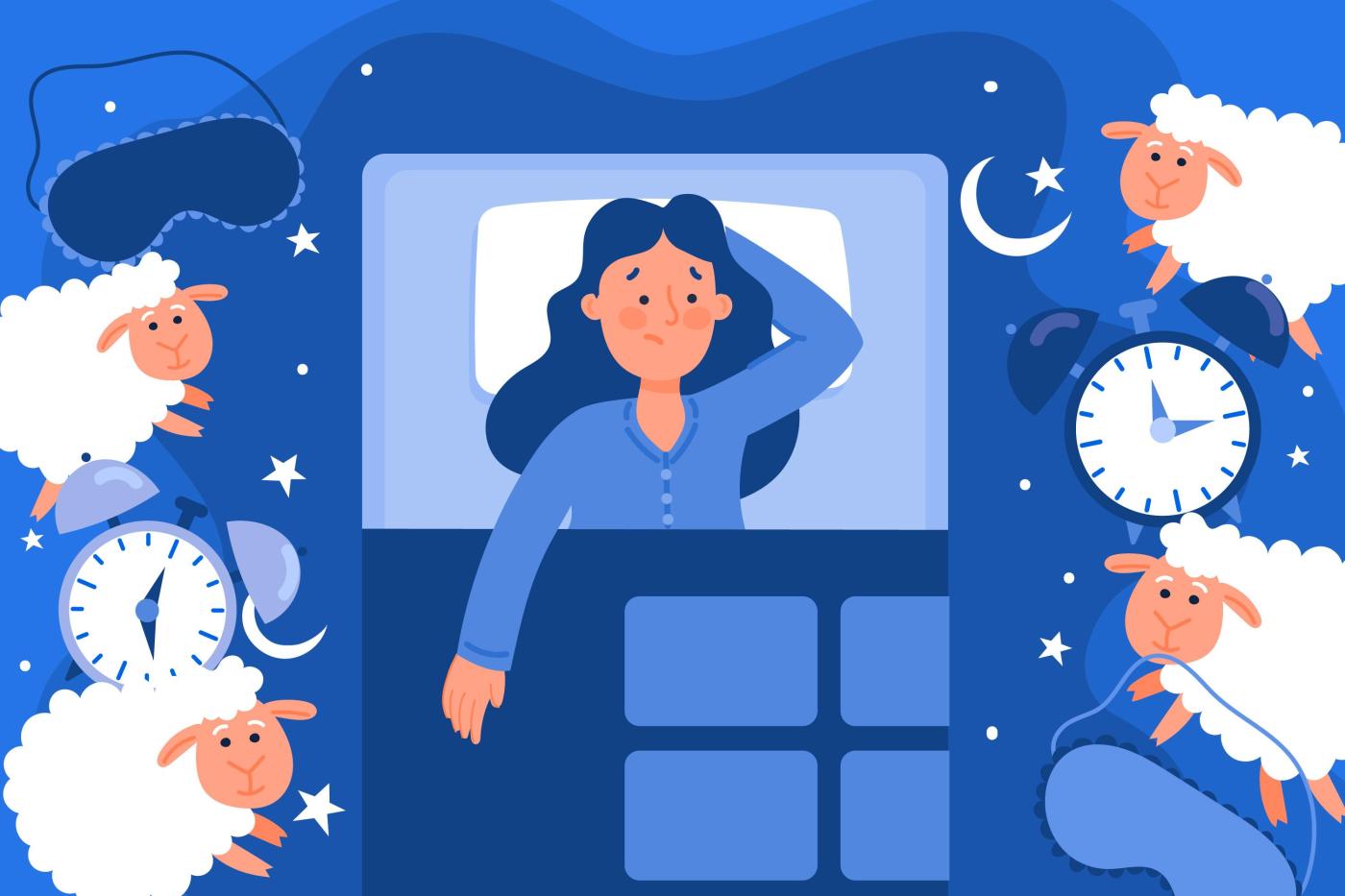
Sleep is extremely important for both physical and mental health, playing a role in everything from brain development and memory to stress and disease1-4. Sleep deprivation, or lack of sleep, can cause emotional as well as physical problems including weakened concentration, impaired memory, reduced performance, and poor decisions5,6. Therefore, good sleep hygiene, meaning our habits surrounding sleep, is critical to a healthy lifestyle. So perhaps it’s no surprise that we’ve developed a wide array of tricks, from counting sheep to white noise machines, to help ourselves fall asleep. But if sleep is so important, why does how we fall asleep differ so much from person to person? Is there one “best” way to fall asleep? Scientists around the world are tackling these questions.
The many ways to fall asleep
While most people agree that getting a good night’s sleep is important, it is not always so easy to do. In 2020, 14.5% of adults surveyed in the United States stated that they had trouble falling asleep most days or every day7. If you search online for “how to fall asleep”, you will see lots of tips from blogs, videos, and ads for sleep aids all offering different tips. According to a study conducted by the National Science Foundation in 2012, at least 70% of people indicate that they need a quiet, dark room to get a good night’s sleep. However, the same study found that many individuals have devices such as cell phones and TVs turned on in their bedroom throughout the night, perhaps to soothe or keep themselves asleep8.
So, do these strategies all work to help us fall asleep, or could they be making sleep worse?
The relationship between noise and sleep
One of the biggest differences in how people try to fall asleep centers around noise. There is increasing evidence that environmental noise, particularly from cars, may be harmful to sleep9, so many sleep solutions focus on eliminating noise. For example, many people choose to wear ear plugs while others turn on a white noise machine, which plays rhythmic noises to lull the brain to sleep and mask disruptive sounds10,11. However, the research on whether these machines actually help with falling asleep or promoting good sleep is contradictory. Additionally, there are concerns that white noise machines could mask important sounds, such as a fire alarm. Finally, there is evidence that constant noise louder than 91dB, which these machines can exceed, can damage hearing, especially in younger people12.
On the other hand, some noises,like music or a podcast, appear to improve sleep13-15. While scientists aren’t sure exactly why music helps people to fall asleep, it is possible that it can relax the individual and soothe them to sleep. Similarly, listening to audiobooks may also improve sleep. In a study conducted in an intensive care unit, listening to audiobooks drastically improved sleep quality of the patients as measured by a sleep quality assessment scale and reduced sleep disruptions. Additionally, the patients’ vital signs such as pulse and blood pressure values improved after listening to audiobooks16.
The blue light problem
Not all common pre-bed rituals revolve around noise; some people like to watch TV or scroll on their phone before bed. However, such interactions with electronics hurt more than they help when it comes to sleep quality. This is because our electronics release a wavelength of light called blue light that disrupts the secretion of melatonin, a hormone known to regulate our daily sleep rhythms and thus our sleep. Therefore, blue light changing the amount and timing of melatonin released in our bodies can alter when and how much we sleep17,18. Because of this, scientists agree that we should limit the time spent on our electronic devices before bedtime so as not to harm our sleep.
How should we fall asleep?
In short, scientists don’t know of one “best” way to fall asleep that works for everybody. It is unclear why some strategies, like listening to music or a podcast, work well for some people while the opposite strategy, complete silence, works better for others.
Despite there not appearing to be one perfect solution for everyone, scientists do agree that certain commonly used methods of falling asleep might be more harmful than helpful. When you are settling in for the night, try to avoid anything that might disrupt your sleepy hormones, like scrolling on your phone or watching TV. Also make sure that your audio isn’t so loud that it might mask important noises in your home. Otherwise, if you find that something like a podcast or audiobook makes you sleepy, go for it!
References
1. Hall, M et al. “Sleep as a mediator of the stress-immune relationship.” Psychosomatic medicine vol. 60,1 (1998): 48-51. doi:10.1097/00006842-199801000-00011
2. Maquet, P. “The role of sleep in learning and memory.” Science (New York, N.Y.) vol. 294,5544 (2001): 1048-52. doi:10.1126/science.1062856
3. Miller, Michelle A. “The Role of Sleep and Sleep Disorders in the Development, Diagnosis, and Management of Neurocognitive Disorders.” Frontiers in neurology vol. 6 224. 23 Oct. 2015, doi:10.3389/fneur.2015.00224
4. Walker, Matthew P. “The role of sleep in cognition and emotion.” Annals of the New York Academy of Sciences vol. 1156 (2009): 168-97. doi:10.1111/j.1749-6632.2009.04416.x\
5. Garbarino, Sergio et al. “Role of sleep deprivation in immune-related disease risk and outcomes.” Communications biology vol. 4,1 1304. 18 Nov. 2021, doi:10.1038/s42003-021-02825-4
6. Orzeł-Gryglewska, Jolanta. “Consequences of sleep deprivation.” International journal of occupational medicine and environmental health vol. 23,1 (2010): 95-114. doi:10.2478/v10001-010-0004-9
7. Adjaye-Gbewonyo D, Ng AE, Black LI. Sleep difficulties in adults: United States, 2020. NCHS Data Brief, no 436. Hyattsville, MD: National Center for Health Statistics. 2022. DOI: https://dx.doi.org/10.15620/cdc:117490.
8. National Sleep Foundation “Bedroom poll: summary of findings.” National Sleep Foundation, VA, USA (2012)
9. Halperin, Demian. “Environmental noise and sleep disturbances: A threat to health?.” Sleep science (Sao Paulo, Brazil) vol. 7,4 (2014): 209-12. doi:10.1016/j.slsci.2014.11.003
10. Yazdannik, Ahmad Reza et al. “The effect of earplugs and eye mask on patients’ perceived sleep quality in intensive care unit.” Iranian journal of nursing and midwifery research vol. 19,6 (2014): 673-8.
11. Riedy, Samantha M et al. “Noise as a sleep aid: A systematic review.” Sleep medicine reviews vol. 55 (2021): 101385. doi:10.1016/j.smrv.2020.101385
12. De Jong, Russell W et al. “Continuous white noise exposure during sleep and childhood development: A scoping review.” Sleep medicine vol. 119 (2024): 88-94. doi:10.1016/j.sleep.2024.04.006
13. de Niet, Gerrit et al. “Music-assisted relaxation to improve sleep quality: meta-analysis.” Journal of advanced nursing vol. 65,7 (2009): 1356-64. doi:10.1111/j.1365-2648.2009.04982.x
14. Dickson, Gaelen Thomas, and Emery Schubert. “How does music aid sleep? literature review.” Sleep medicine vol. 63 (2019): 142-150. doi:10.1016/j.sleep.2019.05.016
15. Bjorvatn, Bjørn et al. “Do people use methods or tricks to fall asleep? A comparison between people with and without chronic insomnia.” Journal of sleep research vol. 32,2 (2023): e13763. doi:10.1111/jsr.13763
16. Mermer, Elmas, and Selda Arslan. “The effect of audiobooks on sleep quality and vital signs in intensive care patients.” Intensive & critical care nursing vol. 80 (2024): 103552. doi:10.1016/j.iccn.2023.103552
17. Tordjman, Sylvie et al. “Melatonin: Pharmacology, Functions and Therapeutic Benefits.” Current neuropharmacology vol. 15,3 (2017): 434-443. doi:10.2174/1570159X14666161228122115
18. Chang, Anne-Marie et al. “Evening use of light-emitting eReaders negatively affects sleep, circadian timing, and next-morning alertness.” Proceedings of the National Academy of Sciences of the United States of America vol. 112,4 (2015): 1232-7. doi:10.1073/pnas.1418490112
 PennNeuroKnow
Leave a comment